
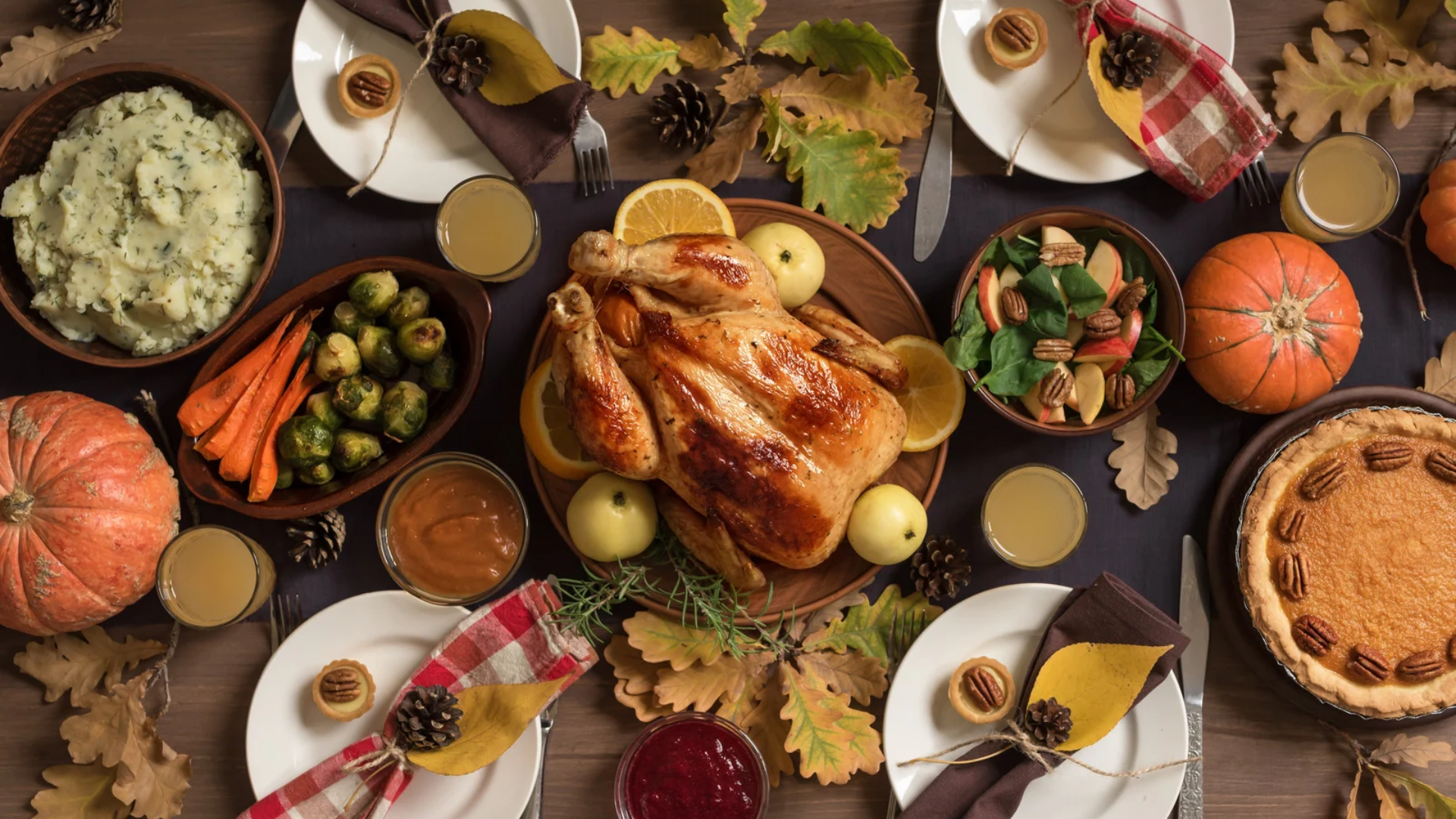
Thanksgiving is one of those meals where nobody is thinking about their enamel. You're thinking about whether the rolls are still warm, who's bringing the good stuffing, and how to politely claim the corner piece of pecan pie. That's exactly how it should be. But if you've ever wondered which parts of the holiday spread are quietly making your dentist wince, and which ones are actually on your teeth's side, this is for you. Spoiler: the turkey is fine. The story gets more interesting from there.
It's Less About What You Eat and More About How Long It Lingers
Before we walk the table, one idea explains almost everything. Your mouth is full of bacteria that love sugar and refined carbohydrates, and when they feed, they produce acid. That acid softens enamel for a little while afterward, and your saliva gradually neutralizes it and helps your teeth rebuild. A single bite of pie is not a problem. The trouble starts when the acid attacks keep coming, one after another, with no break in between.
Thanksgiving is practically designed to cause that. The meal stretches for hours, there's a snack table before dinner, dessert after, leftovers by evening, and a drink in your hand through most of it. So as we go through the menu, keep in mind that frequency and duration matter at least as much as the food itself.
The Appetizer Table: Snackers, Beware
The pre-dinner spread is where most people quietly rack up their longest stretch of sugar exposure, because it's casual grazing with no clear start or finish. Crackers, chips, and dinner rolls deserve more suspicion than they get. They don't taste sweet, but refined starches break down into sugars in your mouth and tend to get packed into the grooves of your molars. A pillowy roll that mashes into a paste is arguably stickier on your teeth than a lot of candy.
On the friendlier side of the table, cheese is a quiet hero. It stimulates saliva, it contains calcium and phosphate that support enamel, and it can help nudge the acidity in your mouth back toward neutral. Crunchy raw vegetables like celery, carrots, and cucumber help too, since chewing them stimulates saliva and gives your teeth a gentle scrubbing. If you're hosting, a cheese and veggie board is one of the easiest ways to be kind to everyone's teeth without anyone noticing.
The Main Event: Mostly Good News
Turkey itself is not going to cause you any dental trouble. Plain protein doesn't feed cavity-causing bacteria, and a hearty plate of savory food actually boosts saliva flow, which is exactly what your mouth wants. Green beans, roasted vegetables, and the other not-too-sweet sides are similarly harmless.
The sides that deserve a closer look are the ones that blur the line with dessert. Candied yams and the sweet potato casserole topped with marshmallows are heavy on sticky sugar. Cranberry sauce is the double offender, since it brings both sugar and acid to the party. None of these need to be skipped. They just fall into the category of "enjoy it, then give your mouth a break afterward."
One small habit worth adopting: sip water between bites and after your plate. It rinses away leftover sugar and acid, it keeps saliva flowing, and it costs you nothing.
The Drinks: This Is Where Teeth Really Feel It
Red wine gets the most attention here, and it deserves some of it. It's acidic, which temporarily softens the enamel, and it contains pigments that cling to tooth surfaces. Together, that's why a long evening of red wine can leave teeth looking a little dull or grayish by the end of the night. Sparkling wine, hard cider, and anything with a citrus garnish bring acidity of their own. And sweet cocktails combine the acid and the sugar in one glass.
The real culprit, though, is not the wine. It's the sipping. One glass nursed over three hours exposes your teeth to acid for three hours, whereas the same glass enjoyed with a meal is cleared away much faster. You don't have to give up your drink. A few simple moves help:
Alternate with water so you're rinsing as you go. Drink with food rather than between meals when you can. And don't brush right after, which brings us to one of the most common mistakes of the holiday.
Coffee and tea after dinner are another quiet source of staining, especially with a bit of sugar added. If you're someone who cares about keeping a bright smile for holiday photos, a glass of water after your coffee makes a real difference.
Dessert: Pie Is Fine, Grazing on Pie Is the Problem
Here's the encouraging part. A slice of pumpkin or pecan pie eaten at the end of a meal, when your saliva is already flowing, does far less damage than the same amount of sugar spread across an afternoon. Dessert as a single event is much easier on your teeth than dessert as a long, ongoing snack.
That said, a few specifics are worth knowing. Pecan pie, caramel desserts, and anything chewy tend to stick to teeth and linger in the grooves of your molars. They're also the foods most likely to tug on older fillings and crowns, so if you have existing dental work, take your time and chew gently. Pumpkin pie is relatively mild by comparison. Apple pie brings some acid from the fruit but is otherwise fairly middle of the road.
A fun and genuinely useful trick: finish with a small piece of cheese or a handful of nuts. It sounds odd, but it's a classic dentist-approved move, since it helps clear sugar and restore a more neutral environment in your mouth.
A Quick Word About Nuts and Shells
Speaking of nuts, if there's a bowl of whole pecans or walnuts with a nutcracker nearby, please use the nutcracker. Cracking shells with your teeth is one of the more reliable ways to chip a tooth or crack a filling, and a broken tooth is a much less festive way to spend the long weekend. The same goes for chewing ice from your drink and for biting into unpopped kernels at the bottom of the popcorn bowl, if that's part of your family's football tradition.
What to Do After the Meal
The urge to brush the second you leave the table is a good instinct with one catch. After acidic foods and drinks like wine, cranberry sauce, and anything citrusy, your enamel is temporarily softened, and brushing right away can wear on it more than you'd like. Rinse with water first, then wait about thirty minutes before you brush. If you can't wait, sugar-free gum is a good bridge. Chewing stimulates saliva, which does a lot of the cleaning and neutralizing work for you.
Then brush and floss before bed like you normally would, and don't skip it just because you're full and sleepy. Food that stays on your teeth overnight, when saliva flow naturally slows down, is the most damaging scenario of all.
The Leftovers Trap
Thanksgiving doesn't end on Thursday. For many families, the leftover phase is where the real snacking happens, with pie for breakfast, rolls at noon, and a little more of everything in between. It's perfectly fine to enjoy it, and it's also the stretch where a little intention helps most. Try to keep the sweet leftovers to a mealtime rather than an all-day nibble, and keep a glass of water nearby.
So What Should You Actually Do?
The short version is refreshingly simple. Enjoy the meal. Drink water throughout. Have dessert as part of the meal rather than a long grazing session. Choose a nutcracker over your teeth. Wait before you brush after acidic foods and drinks, then brush well before bed. And if cheese and crunchy vegetables are on the menu, lean into them.
If you've noticed that something feels sensitive, a filling feels a little off, or a tooth gave you a sharp reminder over the holiday, that's worth a quick look rather than a wait-and-see. And if the holidays have you thinking about a brighter smile for the photos and gatherings coming up, it's a great time to come in and talk through what's realistic.
We hope your table is full, your pie is excellent, and your teeth come out of the weekend as happy as you do. Give us a call or visit our site to schedule a visit at our Bellaire or The Woodlands office.